

Shilajit: The Ancient "Conqueror of Mountains" for Modern Vitality
In the world of holistic healing, few substances carry as much mystery and reverence as Shilajit. Often called the "Blood of the Mountains" or the "Destroyer of Weakness," this thick, mineral-rich resin has been a cornerstone of Ayurvedic medicine for over 3,000 years.
At Meadow Herbal Tea House, we believe in the power of time-tested earth medicine. As we navigate the stressors of modern life, many are looking back to ancient traditions to find balance. Today, we’re exploring why this Himalayan treasure is making such a significant impact on wellness journeys today.
What is Shilajit and Where Does it Originate?
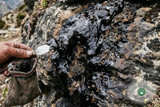
Shilajit isn’t a herb or a plant in the traditional sense. It is a biogenic substance—a natural exudate that seeps from the cracks of rocks in high-altitude mountain ranges, most notably the Himalayas.
It is formed over centuries through the slow decomposition of specific plant matter and minerals. Under the intense pressure of the mountains and the heat of the sun, these materials transform into a potent, tar-like substance packed with organic compounds.
A Legacy of Healing: The Historical Perspective
Historically, Shilajit was discovered when Himalayan villagers observed large white monkeys migrating to the mountains in the summer. They watched as the monkeys ate the black substance seeping from the rocks and noticed they remained remarkably strong and youthful into old age.
In Sanskrit, the word Shilajit means "Conqueror of Mountains and Destroyer of Weakness." Ancient healers used it as a Rasayana (rejuvenative) to:
- Enhance "Ojas" (vital energy).
- Support longevity and cognitive clarity.
- Act as a "yogavahi," a substance that enhances the absorption of other herbs taken with it.
Why People Use Shilajit Today
While the ancients used it for spiritual and physical fortitude, modern science has begun to identify the "why" behind its benefits. The "secret sauce" of Shilajit is Fulvic Acid.
- Mineral Density: It contains over 84 minerals in ionic form, which the body can easily absorb.
- Energy & Mitochondria: It helps the body produce ATP (the primary energy currency of our cells), making it a favorite for those struggling with fatigue.
- Cognitive Health: Early research suggests that the fulvic acid in Shilajit may help support brain health and memory.
- Detoxification: Fulvic acid acts as a natural chelator, helping the body transport nutrients into cells and flush out toxins.
Choosing Your Path: Liquid, Resin, or Gummies?
At Meadow Herbal Tea House, we understand that everyone’s wellness routine is different. We offer Shilajit in three distinct forms to suit your lifestyle:
This is Shilajit in its most traditional, potent state. It is a thick paste that you dissolve in warm water or tea.
- Best for: The purist who wants the most authentic experience and doesn't mind the strong, earthy, smoky flavor.
We off a liquid form that provides a highly bioavailable concentrated drop. It’s easier to mix than the resin and offers a precise way to control your dosage.
- Best for: Those who want potency with a bit more convenience for daily use.
For those who find the "earthy" taste of pure Shilajit a bit too intense, the gummies offer the benefits of the minerals without the strong flavor profile.
- Best for: On-the-go support and those new to the world of Shilajit.
A Note from MeadowQueen
With four decades of holistic practice in New Jersey, I have seen many "trends" come and go. Shilajit is not a trend; it is an elemental part of the earth’s pharmacy. When introducing Shilajit into your routine, remember that consistency is key. Listen to your body, start with a small amount, and feel the grounding energy of the mountains take hold.
_____________________________________
Frequently Asked Questions: Shilajit 101
Q: What does Shilajit actually taste like? A: In its pure resin or liquid form, Shilajit has a very distinct, bold flavor. Most describe it as earthy, smoky, and slightly bitter—reminiscent of strong herbal tea or a medicinal molasses. If you have a sensitive palate, we off Shilajit Gummies that provide the same mineral benefits with a much milder, pleasant taste.
Q: How do I use the Shilajit Resin or Liquid? A: It’s best enjoyed dissolved in warm (not boiling) water, herbal tea, or even a smudge of warm milk. For the resin, a "pea-sized" amount is the traditional serving. For the liquid, simply add the recommended drops to your morning beverage.
Q: How long does it take to feel the effects? A: While some people notice a subtle lift in energy and mental clarity within a few days, Shilajit is a "cumulative" tonic. In holistic traditions, it is most effective when taken consistently over 4–6 weeks to allow the minerals to fully support your body’s natural systems.
Q: Can I take Shilajit with my other herbs or supplements? A: Yes! In Ayurveda, Shilajit is known as a yogavahi, which means it actually helps carry other nutrients deeper into the body's tissues. It is often paired with Ashwagandha or Turmeric to enhance their effectiveness.
Q: Is Shilajit safe for everyone? A: Shilajit is a potent mineral complex. While it is natural, we always recommend consulting with your healthcare provider if you are pregnant, nursing, or taking medications for blood pressure or iron-deficiency disorders.
Recent Posts
-
Shilajit: The Ancient "Conqueror of Mountains" for Modern Vitality
In the world of holistic healing, few substances carry as much mystery and reverence as Shilajit. Of …Mar 23rd 2026 -

Start the New Year Refreshed by Eating Yellow, Water-Rich Fruits
The new year is an ideal time to focus on healthy eating habits that support digestion, hydration, a …Jan 4th 2026 -
Milk Thistle: A Timeless Herb With a Modern Role in Everyday Wellness
For centuries, certain plants have earned a reputation for supporting overall well-being, and few ar …Nov 29th 2025